Title Image

Highlights

CTR Workshop
Body as space

From August 26th to 30th, 2024, from 2:00 p.m. to 6:00 p.m.

Sensitivity to initial conditions II
An introduction to Real Time Composition: body as space


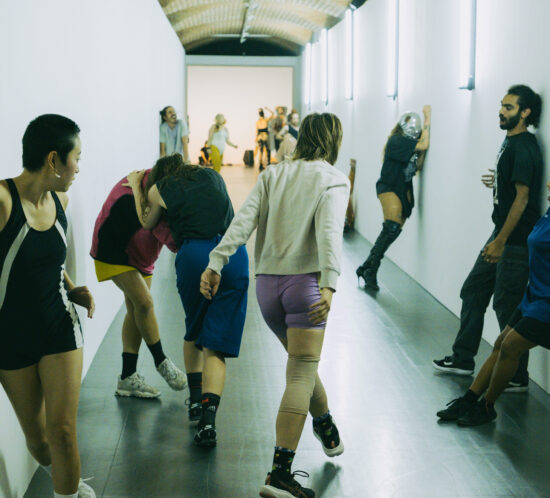
In this workshop, João Fiadeiro will collaborate with performer and artist Márcia Lança to create and study how the initial conditions for the practice of Real-Time Composition are established. The game will always start, as an initial protocol, from positions and relations generated by Márcia and João, which will function as an initial reference for exploring and experimenting with Real-Time Composition. These initial positions-relations will function as micro-scores that will condition the experience of the practice. Finding the experience of freedom within a score-environment composed of restrictions, while at the same time developing autonomous and inter-dependent relationships with those who play (humans and non-humans), will be the “object of study” of this workshop.

Informations

Select each of the sections below to find out more about the workshop and the enrolment process.

Who is it for

This cycle of workshops is aimed at artist-researchers with experience in improvisation (in dance, performance or theatre).

Maximum number of participants: 16 people.

Schedules

Summer workshop: From 26 to 30 August 2024, from 14h00 to 18h00.

Venue

Forum Dança / Espaço da Penha
Travessa do Calado, 26B
1170-070 Lisboa

Participation fee

    • Registration fee: €100 (one hundred euros);
    • 10% discount: for people who attend or have attended Forum Dança long-term courses (CGPAE/PEPCC/etc.);
    • 25% discount: for people who attend or have attended PACAP.

Pre-registration

Pre-registration is done using the form available on our website and will be validated once proof of payment has been received and sent to our email address.

Registration process

  1. Pre-register online using the form provided;
  2. Wait for our email with payment instructions;
  3. Pay your registration fee as indicated in the email sent to you;
  4. Send us proof of payment to our email address;
  5. Your registration will only be validated once we have received your receipt.

Registration form

All fields are mandatory.

Registrations are closed.

Contextualisation

Select each of the sections below to find out more.

*Real Time Composition

* Real Time Composition is a term used in a wide range of artistic interactions and contexts, most commonly in the field of electronic music and its relationship with computer science. In the field of contemporary dance, it is used by many artists as a synonym for the practice of “improvisation” (a term somewhat “hijacked” by common sense as an arbitrary, disorganized or chaotic experience), in order to emphasize the complexity and rigor involved in the act of improvising, especially when presented publicly.


When João Fiadeiro began his research into improvisation in the 1990s, the expression most often used to claim this rigor was “instant composition”. Intuitively João Fiadeiro decided to adopt the notion of ” real time composition” to designate his research, because it was the term that best corresponded to the experience of expanded, distended and plastic time that he had when “colliding” with the unknown, whether when improvising or composing. He was later able to better formulate this resistance to the term “instantaneous” when he realized that an important part of the hypothesis he put forward as a researcher, on the performer’s experience with time, was based on the premise that the idea of an “instant” is made by the human being, who has decided, out of interest (and profit) that an instant is the thinnest slice of time and that successive instants replace the previous one.


More recently, by accessing the writings of authors who think about the concept of time, this reasoning has gained even more ground. In particular through the formulation of “operative time” that Giorgio Agamben uses in “The Time That Remains”. To defend his hypothesis, Agamben relies on the linguist Gustave Guillaume (1883-1960) who states (in his book Temps et Verbe) that “all mental experience, however rapid [it may be], requires a certain amount of time, which may be very brief, but is no less real”. What Guillaume defines as “operative time” (and João Fiadeiro as “real time”) is exactly “the time that the mind uses to realize an image-time”. Agamben complements this reasoning when he says that “a careful examination of the phenomena of language shows that languages organize their verbal systems not according to the preceding linear scheme (…) but through the reference of the constructed image in the operative time of its construction.” Operative time (or, as Fiadeiro would say, “real time”) “is neither the line – representable but unthinkable – of chronological time, nor the instant – equally unthinkable – of its end, and even less a segment extracted from chronological time (…). It is rather the operative time that urges on chronological time and works and transforms it from within, time that we need in order to bring time to an end – in this sense: the time that remains.”


When discussing the term “instant” or “real time” to designate the type of “improvisation” João Fiadeiro researches, he is not referring to the time shared between improviser and spectator, but to the internal time of the performer, in the management of the experience that mediates the identification, circumscription and processing of stimuli; the selection and choice of relation possibilities; and their consequent manifestation in the form of gesture and action.


João Fiadeiro’s use of the expression Real Time Composition to describe his research and practice must be understood in the light of this reflection.

João Fiadeiro

Forum Dança | PACAP 5 - João Fiadeiro
João Fiadeiro © Ana Viotti

João Fiadeiro (1965) belongs to the generation of artists who emerged in the late eighties in Portugal and gave rise to Nova Dança Portuguesa [New Portuguese Dance], a movement highly influenced by the Judson Dance Theater in America and New Dance scene in Europe.


Between 1990 and 2019 he was Atelier RE.AL’s artistic director, a venue that played a major role in the development of contemporary dance and trans-disciplinary initiatives in Portugal, both within art and between art, science and society. Among the projects organized by this association, the LAB/Moving Projects (1992-2006), a work-in-progress platform from emergent artists; “Restos, rastos e traços” (Leftovers, tracks and traces) and “G.host” (2009-2011), two residency programs focused on documentation practices for contemporary art; and the project AND_Lab (2011-2014), a research laboratory working on the relationship between ethics, aesthetics and politics, are among the initiatives that had the biggest impact in the community.


João Fiadeiro has toured extensively throughout Europe, North America and South America with his solo and group works. His pieces navigate in-between disciplines (performance, dance and theater), contexts (theaters, museums or site-specific) and formats (choreographies, happenings or lecture-performances), in an attempt to maintain a “radical sensitivity” towards the present and remain vigilant against any form of stagnation or loss of critical discourse.


Between 1995 and 2003 he collaborated with Artistas Unidos (United Artists), a Lisbon based theater company, where he was responsible for the movement of the actors in pieces from Silva Melo, Shakespeare, Brecht, Goethe, etc.. For this company he also staged plays by Samuel Beckett (Waiting for Godot), Sarah Kane (Psychosis 4’48’’) and Jon Fosse (Nightsongs).


Parallel to his work as a choreographer, theater director and curator, João Fiadeiro studied and practiced intensively Contact-Improvisation in the 90’s which led him to pursue and systematize his own research on improvisation under the designation of Real Time Composition. This research, which started as a tool to support his own creative practices, has since been used by researchers from art and science (coming from fields as diverse as anthropology, complex systems sciences or economy), as a theoretical-practical platform to study decision-making, representation and collaboration. This work has led him to teach extensively in different independent venues in Europe and South America (Brasil, Uruguay, Argentina and Chile) and to lead workshop sessions in the most important master programs and schools in Europe that relate to contemporary dance like PACAP/Forum Dança; EXERCE Master, MA in Arts Practice and Visual Culture at Rainha Sofia Museum; SoDA MA Program; Performing Studies at the Hamburg University; Amsterdam Master of Choreography; Master of Theatre DasArts; a.pass_advanced performance and scenography studies; MA Theatre Academy of the University of the Arts Helsinki; Villa Arson; Centre National de la Danse, etc.


The Real Time Composition tool has since expanded its application outside the artistic field with initiatives like “Soft Skills for Hard Decisions”, designed in collaboration with the economist António Alvarenga and applied in human resources departments of foundations; or the discipline “Social Stigmergy” designed for the PhD program at ISCTE University in Lisbon with the complex system scientist Jorge Louçã.


In 2018 João Fiadeiro published his book “Anatomy of a Decision” where he synthesized his life long research on Real Time Composition and in 2019 co-curate (with Romain Bigé) the exhibition Drafting Interior Techniques at Culturgest Gallery, the first retrospective look taken at Steve Paxton work and legacy.

Márcia Lança

Forum Dança | PACAP 5 - Márcia Lança
Márcia Lança

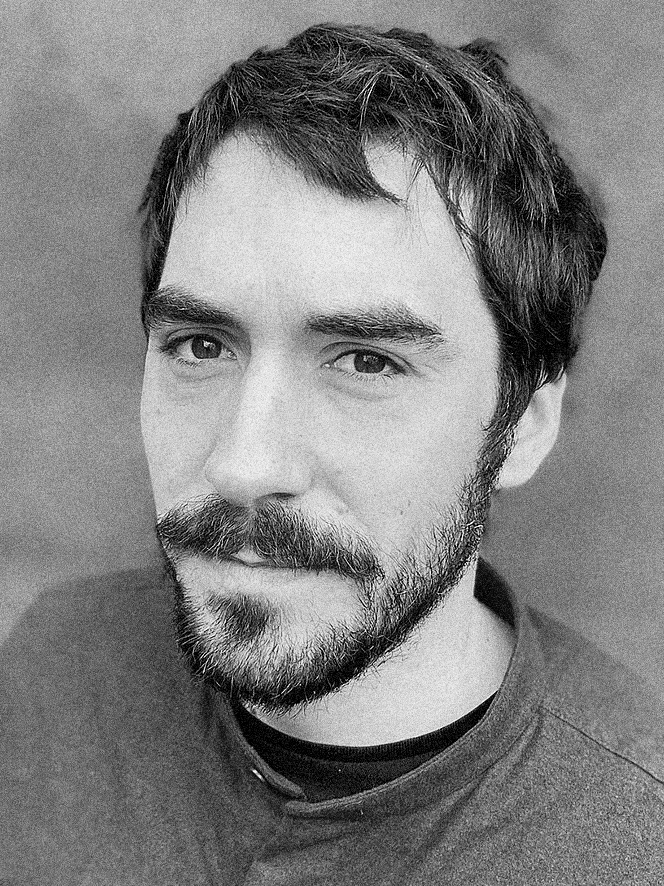
Márcia Lança was born in Beja and lives in Lisbon. In 2008 she founded VAGAR, of which she is artistic director. She has worked as a choreographer and performer in various collaborative configurations.


She moves in territories where the boundaries between the fictional and the real are tenuous and diffuse. Her interest in the poetic materiality of concrete actions and tasks is at the centre of her creative processes.


She is passionate about emerging collective compositions, thought as action and situated constructions.


More information here

TECER activities

CTR Workshop
Space as body

From April 1st to 5th, from 2:00pm to 6:00pm

Sensitivity to initial conditions I
An introduction to Real-Time Composition: space as body


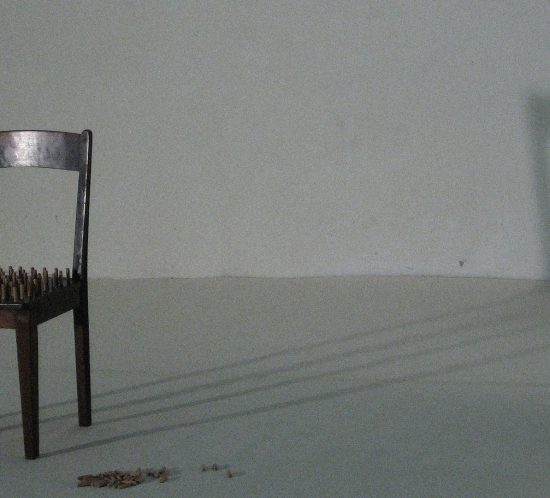
In this workshop, João Fiadeiro will collaborate with architect and artist João Gonçalo Lopes to create the initial conditions for practicing Real Time Composition. The game will always start, as an initial protocol, from a “prepared space” (a bit like John Cage’s “prepared piano”), which will function as a territory for exploring and experimenting with Real Time Composition. This preparation will create a spatial topography which, through the obstructions and restrictions created, will condition the experience of the practice. Finding the experience of freedom within a score-environment composed of restrictions, while developing autonomous and inter-dependent relationships with those who play (humans and non-humans), will be this workshop’s “object of study”.

Informations

Select each of the sections below to find out more about the workshop and the enrolment process.

Who is it for

This cycle of workshops is aimed at artist-researchers with experience in improvisation (in dance, performance or theatre).

Maximum number of participants: 16 people.

Schedules

Easter Workshop: From 1 to 5 April 2024, from 14h00 to 18h00.

Venue

Forum Dança / Espaço da Penha
Travessa do Calado, 26B
1170-070 Lisboa

Participation fee

    • Registration fee: €100 (one hundred euros);
    • 10% discount: for people who attend or have attended Forum Dança long-term courses (CGPAE/PEPCC/etc.);
    • 25% discount: for people who attend or have attended PACAP.

Pre-registration

Pre-registration is done using the form available on our website and will be validated once proof of payment has been received and sent to our email address.

Registration process

  1. Pre-register online using the form provided;
  2. Wait for our email with payment instructions;
  3. Pay your registration fee as indicated in the email sent to you;
  4. Send us proof of payment to our email address;
  5. Your registration will only be validated once we have received your receipt.

Registration form

All fields are mandatory.

Registrations are now closed.

Contextualisation

Select each of the sections below to find out more.

*Real Time Composition

* Real Time Composition is a term used in a wide range of artistic interactions and contexts, most commonly in the field of electronic music and its relationship with computer science. In the field of contemporary dance, it is used by many artists as a synonym for the practice of “improvisation” (a term somewhat “hijacked” by common sense as an arbitrary, disorganized or chaotic experience), in order to emphasize the complexity and rigor involved in the act of improvising, especially when presented publicly.


When João Fiadeiro began his research into improvisation in the 1990s, the expression most often used to claim this rigor was “instant composition”. Intuitively João Fiadeiro decided to adopt the notion of ” real time composition” to designate his research, because it was the term that best corresponded to the experience of expanded, distended and plastic time that he had when “colliding” with the unknown, whether when improvising or composing. He was later able to better formulate this resistance to the term “instantaneous” when he realized that an important part of the hypothesis he put forward as a researcher, on the performer’s experience with time, was based on the premise that the idea of an “instant” is made by the human being, who has decided, out of interest (and profit) that an instant is the thinnest slice of time and that successive instants replace the previous one.


More recently, by accessing the writings of authors who think about the concept of time, this reasoning has gained even more ground. In particular through the formulation of “operative time” that Giorgio Agamben uses in “The Time That Remains”. To defend his hypothesis, Agamben relies on the linguist Gustave Guillaume (1883-1960) who states (in his book Temps et Verbe) that “all mental experience, however rapid [it may be], requires a certain amount of time, which may be very brief, but is no less real”. What Guillaume defines as “operative time” (and João Fiadeiro as “real time”) is exactly “the time that the mind uses to realize an image-time”. Agamben complements this reasoning when he says that “a careful examination of the phenomena of language shows that languages organize their verbal systems not according to the preceding linear scheme (…) but through the reference of the constructed image in the operative time of its construction.” Operative time (or, as Fiadeiro would say, “real time”) “is neither the line – representable but unthinkable – of chronological time, nor the instant – equally unthinkable – of its end, and even less a segment extracted from chronological time (…). It is rather the operative time that urges on chronological time and works and transforms it from within, time that we need in order to bring time to an end – in this sense: the time that remains.”


When discussing the term “instant” or “real time” to designate the type of “improvisation” João Fiadeiro researches, he is not referring to the time shared between improviser and spectator, but to the internal time of the performer, in the management of the experience that mediates the identification, circumscription and processing of stimuli; the selection and choice of relation possibilities; and their consequent manifestation in the form of gesture and action.


João Fiadeiro’s use of the expression Real Time Composition to describe his research and practice must be understood in the light of this reflection.

João Fiadeiro

Forum Dança | PACAP 5 - João Fiadeiro
João Fiadeiro © Ana Viotti

João Fiadeiro (1965) belongs to the generation of artists who emerged in the late eighties in Portugal and gave rise to Nova Dança Portuguesa [New Portuguese Dance], a movement highly influenced by the Judson Dance Theater in America and New Dance scene in Europe.


Between 1990 and 2019 he was Atelier RE.AL’s artistic director, a venue that played a major role in the development of contemporary dance and trans-disciplinary initiatives in Portugal, both within art and between art, science and society. Among the projects organized by this association, the LAB/Moving Projects (1992-2006), a work-in-progress platform from emergent artists; “Restos, rastos e traços” (Leftovers, tracks and traces) and “G.host” (2009-2011), two residency programs focused on documentation practices for contemporary art; and the project AND_Lab (2011-2014), a research laboratory working on the relationship between ethics, aesthetics and politics, are among the initiatives that had the biggest impact in the community.


João Fiadeiro has toured extensively throughout Europe, North America and South America with his solo and group works. His pieces navigate in-between disciplines (performance, dance and theater), contexts (theaters, museums or site-specific) and formats (choreographies, happenings or lecture-performances), in an attempt to maintain a “radical sensitivity” towards the present and remain vigilant against any form of stagnation or loss of critical discourse.


Between 1995 and 2003 he collaborated with Artistas Unidos (United Artists), a Lisbon based theater company, where he was responsible for the movement of the actors in pieces from Silva Melo, Shakespeare, Brecht, Goethe, etc.. For this company he also staged plays by Samuel Beckett (Waiting for Godot), Sarah Kane (Psychosis 4’48’’) and Jon Fosse (Nightsongs).


Parallel to his work as a choreographer, theater director and curator, João Fiadeiro studied and practiced intensively Contact-Improvisation in the 90’s which led him to pursue and systematize his own research on improvisation under the designation of Real Time Composition. This research, which started as a tool to support his own creative practices, has since been used by researchers from art and science (coming from fields as diverse as anthropology, complex systems sciences or economy), as a theoretical-practical platform to study decision-making, representation and collaboration. This work has led him to teach extensively in different independent venues in Europe and South America (Brasil, Uruguay, Argentina and Chile) and to lead workshop sessions in the most important master programs and schools in Europe that relate to contemporary dance like PACAP/Forum Dança; EXERCE Master, MA in Arts Practice and Visual Culture at Rainha Sofia Museum; SoDA MA Program; Performing Studies at the Hamburg University; Amsterdam Master of Choreography; Master of Theatre DasArts; a.pass_advanced performance and scenography studies; MA Theatre Academy of the University of the Arts Helsinki; Villa Arson; Centre National de la Danse, etc.


The Real Time Composition tool has since expanded its application outside the artistic field with initiatives like “Soft Skills for Hard Decisions”, designed in collaboration with the economist António Alvarenga and applied in human resources departments of foundations; or the discipline “Social Stigmergy” designed for the PhD program at ISCTE University in Lisbon with the complex system scientist Jorge Louçã.


In 2018 João Fiadeiro published his book “Anatomy of a Decision” where he synthesized his life long research on Real Time Composition and in 2019 co-curate (with Romain Bigé) the exhibition Drafting Interior Techniques at Culturgest Gallery, the first retrospective look taken at Steve Paxton work and legacy.

João Gonçalo Lopes

João Gonçalo Lopes
João Gonçalo Lopes © Gustavo Ciríaco

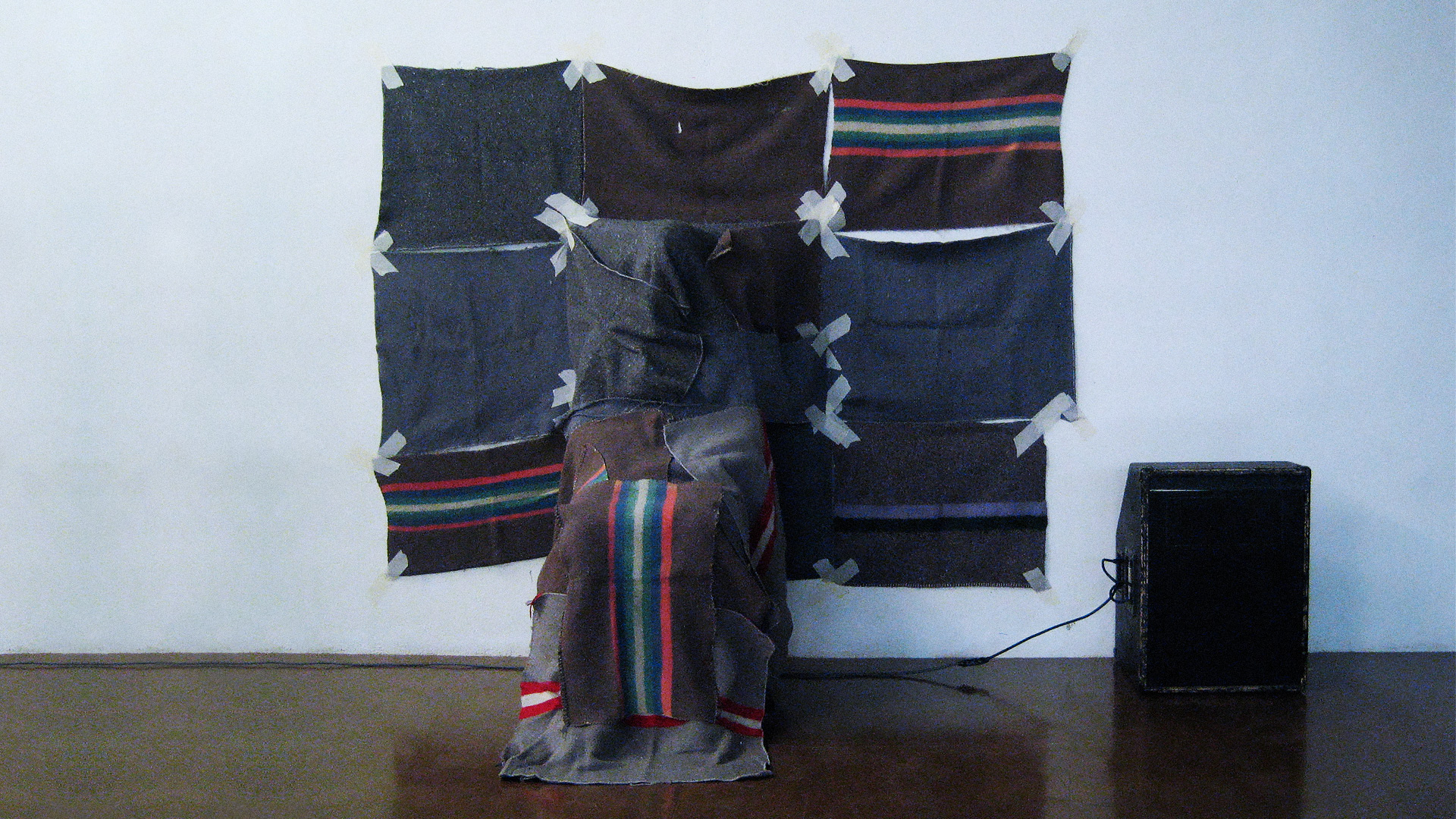
João Gonçalo Lopes is an architect working across disciplines between art, design and education. Having had a diverse experience in different parts of the globe, he is currently working with a hands-on approach on scales that go from urban design, to art instalations or furniture design.


With a context based attitude, his work is rooted in collaboration and community building processes, focusing on the ecology of materials as means to achieve conscious and complex realities.


He values spaces and objects that exist as enablers of experience. For this he uses a broad set of tools that come from different disciplines be it social, political, artistic, constructive or spatial.


More information here.

TECER activities

TECER | CTR 2024

The weekly sessions, occasional workshops and annual courses organized by TECER | CTR at Forum Dança aim to multiply the platforms for accessing Real Time Composition, both in terms of intensity and proposed contents.


In 2024 we are offering two workshops – at Easter and in the summer – entitled “Sensitivity to Initial Conditions: an introduction to Real Time Composition”. These are practical workshops, where bodies are invited to act and interact, so although it is open to performers, researchers and artists from any artistic discipline or area of thought (as long as they are curious about the concepts presented in this presentation), there must be a physical predisposition for participation. The main language will be Portuguese. If there are participants who do not speak Portuguese, we will try to organize forms of shared translation within the group. Registrations will be accepted on a first-come, first-served basis.

Easter Workshop

From April 1st to 5th, from 2:00pm to 6:00pm

Sensitivity to initial conditions I
An introduction to Real-Time Composition: space as body

Summer Workshop

From August 26th to 30th, from 2:00 p.m. to 6:00 p.m.

Sensitivity to initial conditions II
An introduction to Real Time Composition: body as space

Composição em Tempo Real, João Fiadeiro / Forum Dança

CTR open sessions

Every Monday from 6pm to 8pm

Sessions open to the community
With the facilitation of João Fiadeiro, Márcia Lança, Cláudia Dias, Carolina Campos and/or Daniel Pizamiglio.

Tempo Real LAB - Laboratório de estudo, transmissão e aplicação da ferramenta Composição em Tempo Real.

Intensive CTR program

From September 30th to December 20th 2024


Intensive 12-week research and experimentation programme in Real-Time Composition.

TECER activities

Real Time Composition, João Fiadeiro / Forum Dança

TECER | CTR 1

Time | Study | Composition | Experimentation | Real 2

“If we observe the spider at work, what it eventually weaves first (…) is not the web; what eventually happens is that the little pearl that it weaved, suspended on the end of the thread carried by the wind, finds a branch [a wall, a corner]. (…) Is it possible to say that the spider has the project of weaving its web? I don’t think so. It’s better to say that the web has the project of being woven.”


Fernand Deligny, O Aracniano

Presentation

TECER | CTR is a project directed by João Fiadeiro as part of his role as artist-researcher in residency at Forum Dança. Through this platform, João Fiadeiro intends to transmit the study (and study the transmission) of Real Time Composition*, a (theoretical) practice and a (practical) theory that offers itself as a “field”, a place-territory that aims to welcome and host the forces at play in what we conventionally call the present. Within this present and from RTC’s perspective, an expanded time moves, simultaneously “no more” and “not yet”. A non-linear time, experienced like a Möbius band, with no inside or outside, with no before nor after. A time where the shadow, the margin and the fragment have the same prominence as what is in the light, in the center and in the whole. A time when positions are taken so that com3 -positions can take place.


To share Real Time Composition from the potency within the “not-knowing” and not from the power carried by the “knowing”. To share Real Time Composition, reducing the distance and the split between theory and practice, process and product, action and observation, action and procrastination, memory and forgetting, teaching and learning.


This is TECER | CTR ambition as a center for the study and experimentation of Real Time Composition.


1 TECER | CTR is the Portuguese acronym for Weaving Real Time Composition.
2 Time, Study, Composition, Experimentation, Real.
3 In Portuguese, the preposition “com” means “with” and taking a position-with instead of com-posing (arriving with a readymade “with”) is the performer’s main challenge in this practice. Following and repeating this modus operandi will eventually give place to a set of relations between positions (position-with-position-with-position-with- position…) which is how an emergent system can be generated within this practice.

Contextualisation

Select each of the sections below to find out more.

Sensitivity to Initial Conditions

In Real Time Composition, the rules of the game are defined as the game is played and not, as in most games (including the game of life) before the game begins. Before beginning the practice of Real Time Composition, what is established as common ground are the premises and principles that govern the game, in a kind of collective ethical commitment where its singularity is circumscribed, its cardinal axes are defined, and the conceptual framework of this practice is established. In general terms, the three premises that guide this commitment can be summarized using simple coordinates:

  1. You don’t explain your move.
  2. You don’t play twice in a row.
  3. You don’t correct the previous move.

Following (and as a result of) these initial restrictions, the game unfolds in a fine and meticulous management by the players, of the doses of repetition and difference that, at each move, are introduced into the system.


Another key concept in this practice is the principle of “non-linearity”. In Real Time Composition, it is always the subsequent action that retroactively establishes the rules of the game (of that game is being played, because as soon as the game in question ends, the rules are instantaneously obsolete). That’s why you can only really talk about a game when you are halfway through. In other words, for most of the time Real Time Composition experience isn’t spent playing the game but finding the game. This encounter takes place a) when, from a position, you establish a relation; and b) when, from that relation you establish an operation. This process takes place in three stages:

  1. The time when a “position” takes place.
  2. The time when a “com (with)” takes place (creating a “positioning-with” type of relationship).
  3. The time when a “positioning-with” takes place (creating a “positioning-with-positioning” type of operation).

The resulting “positioning-with-positioning” operation works like an equation, a fractal that expands into what we call instant, moment or present. Developing a sensitivity to this triad – positioning-with-positioning – is the necessary condition to play Real Time Composition’s game.

*Real Time Composition

* Real Time Composition is a term used in a wide range of artistic interactions and contexts, most commonly in the field of electronic music and its relationship with computer science. In the field of contemporary dance, it is used by many artists as a synonym for the practice of “improvisation” (a term somewhat “hijacked” by common sense as an arbitrary, disorganized or chaotic experience), in order to emphasize the complexity and rigor involved in the act of improvising, especially when presented publicly.


When João Fiadeiro began his research into improvisation in the 1990s, the expression most often used to claim this rigor was “instant composition”. Intuitively João Fiadeiro decided to adopt the notion of ” real time composition” to designate his research, because it was the term that best corresponded to the experience of expanded, distended and plastic time that he had when “colliding” with the unknown, whether when improvising or composing. He was later able to better formulate this resistance to the term “instantaneous” when he realized that an important part of the hypothesis he put forward as a researcher, on the performer’s experience with time, was based on the premise that the idea of an “instant” is made by the human being, who has decided, out of interest (and profit) that an instant is the thinnest slice of time and that successive instants replace the previous one.


More recently, by accessing the writings of authors who think about the concept of time, this reasoning has gained even more ground. In particular through the formulation of “operative time” that Giorgio Agamben uses in “The Time That Remains”. To defend his hypothesis, Agamben relies on the linguist Gustave Guillaume (1883-1960) who states (in his book Temps et Verbe) that “all mental experience, however rapid [it may be], requires a certain amount of time, which may be very brief, but is no less real”. What Guillaume defines as “operative time” (and João Fiadeiro as “real time”) is exactly “the time that the mind uses to realize an image-time”. Agamben complements this reasoning when he says that “a careful examination of the phenomena of language shows that languages organize their verbal systems not according to the preceding linear scheme (…) but through the reference of the constructed image in the operative time of its construction.” Operative time (or, as Fiadeiro would say, “real time”) “is neither the line – representable but unthinkable – of chronological time, nor the instant – equally unthinkable – of its end, and even less a segment extracted from chronological time (…). It is rather the operative time that urges on chronological time and works and transforms it from within, time that we need in order to bring time to an end – in this sense: the time that remains.”


When discussing the term “instant” or “real time” to designate the type of “improvisation” João Fiadeiro researches, he is not referring to the time shared between improviser and spectator, but to the internal time of the performer, in the management of the experience that mediates the identification, circumscription and processing of stimuli; the selection and choice of relation possibilities; and their consequent manifestation in the form of gesture and action.


João Fiadeiro’s use of the expression Real Time Composition to describe his research and practice must be understood in the light of this reflection.

João Fiadeiro

Forum Dança | PACAP 5 - João Fiadeiro
João Fiadeiro © Ana Viotti

João Fiadeiro (1965) belongs to the generation of artists who emerged in the late eighties in Portugal and gave rise to Nova Dança Portuguesa [New Portuguese Dance], a movement highly influenced by the Judson Dance Theater in America and New Dance scene in Europe.


Between 1990 and 2019 he was Atelier RE.AL’s artistic director, a venue that played a major role in the development of contemporary dance and trans-disciplinary initiatives in Portugal, both within art and between art, science and society. Among the projects organized by this association, the LAB/Moving Projects (1992-2006), a work-in-progress platform from emergent artists; “Restos, rastos e traços” (Leftovers, tracks and traces) and “G.host” (2009-2011), two residency programs focused on documentation practices for contemporary art; and the project AND_Lab (2011-2014), a research laboratory working on the relationship between ethics, aesthetics and politics, are among the initiatives that had the biggest impact in the community.


João Fiadeiro has toured extensively throughout Europe, North America and South America with his solo and group works. His pieces navigate in-between disciplines (performance, dance and theater), contexts (theaters, museums or site-specific) and formats (choreographies, happenings or lecture-performances), in an attempt to maintain a “radical sensitivity” towards the present and remain vigilant against any form of stagnation or loss of critical discourse.


Between 1995 and 2003 he collaborated with Artistas Unidos (United Artists), a Lisbon based theater company, where he was responsible for the movement of the actors in pieces from Silva Melo, Shakespeare, Brecht, Goethe, etc.. For this company he also staged plays by Samuel Beckett (Waiting for Godot), Sarah Kane (Psychosis 4’48’’) and Jon Fosse (Nightsongs).


Parallel to his work as a choreographer, theater director and curator, João Fiadeiro studied and practiced intensively Contact-Improvisation in the 90’s which led him to pursue and systematize his own research on improvisation under the designation of Real Time Composition. This research, which started as a tool to support his own creative practices, has since been used by researchers from art and science (coming from fields as diverse as anthropology, complex systems sciences or economy), as a theoretical-practical platform to study decision-making, representation and collaboration. This work has led him to teach extensively in different independent venues in Europe and South America (Brasil, Uruguay, Argentina and Chile) and to lead workshop sessions in the most important master programs and schools in Europe that relate to contemporary dance like PACAP/Forum Dança; EXERCE Master, MA in Arts Practice and Visual Culture at Rainha Sofia Museum; SoDA MA Program; Performing Studies at the Hamburg University; Amsterdam Master of Choreography; Master of Theatre DasArts; a.pass_advanced performance and scenography studies; MA Theatre Academy of the University of the Arts Helsinki; Villa Arson; Centre National de la Danse, etc.


The Real Time Composition tool has since expanded its application outside the artistic field with initiatives like “Soft Skills for Hard Decisions”, designed in collaboration with the economist António Alvarenga and applied in human resources departments of foundations; or the discipline “Social Stigmergy” designed for the PhD program at ISCTE University in Lisbon with the complex system scientist Jorge Louçã.


In 2018 João Fiadeiro published his book “Anatomy of a Decision” where he synthesized his life long research on Real Time Composition and in 2019 co-curate (with Romain Bigé) the exhibition Drafting Interior Techniques at Culturgest Gallery, the first retrospective look taken at Steve Paxton work and legacy.

General Note

For those wishing to take part in any of our CTR transmission and practice programmes


Even though we are committed to creating a safe place of practice, sustained by a work ethic based on principles of care and mutual respect, the experience of improvisation and performance, by definition, can take performers to places of intense sharing, often vulnerable and emotionally charged, where doubt and error have a prominent place. When signing up, bear in mind that in this practice you may find yourself in situations of experimentation that shake up your comfort zones, even if only temporarily.

TECER activities

Núcleo - Programa de Residências Artísticas do Forum Dança

Núcleo 2024

Núcleo emerges as a project that fulfils one of Forum Dança’s objectives: to host artistic residencies and the informal presentations that result from them, under the care of a specific programme line.

It has a self-reflexive impulse in Forum Dança’s history, referencing the Núcleo de Apoio Coreográfico (NAC) – Choreographic Support Centre -, which in the 1990s was an important platform for supporting the creation and internationalization of Portuguese dance.

It is a place of experimentation, where the craft of creating, showing, reflecting, creating circularity with the artistic community and its public side in the creation and mediation of audiences is taken care of.

Artistic Residencies 2024

Open Call deadline: February 4, 2024

As one of Forum Dança’s objectives is to support residencies, in accordance with the programme outlined by its artistic direction, the Residency Programme is designed to create a space that allows for a period of experimentation and research through action, linking creation with transmission to the artistic community.

This year’s programme will support three projects in the field of contemporary dance or performance. We will favour projects that are at an early stage of development.

The programme offers rehearsal space, artistic supervision by Forum Dança’s associate artist-researcher João Fiadeiro and a support grant of €750 (seven hundred and fifty euros).

Periods

  • Residency 1: October 7 to 18
  • Residency 2: October 28 to November 8
  • Residency 3: November 18 to 29

Conditions

  1. Support for 3 projects selected by Forum Dança’s management;
  2. A grant of €750 (seven hundred and fifty euros) per residency, upon submission of a green receipt or equivalent (in the case of artists not resident in Portugal, must present a tax residency certificate issued by the authorities in their country of residence.);
  3. Support for publicising the project in Forum Dança’s media;
  4. Final public sharing, in the residency space, in the form of an informal show, talk or similar, with João Fiadeiro as mediator;
  5. Mandatory mention of “Support for Creation – Forum Dança” and insertion of the logo in all the project’s promotional material;
  6. Provision of the record of the presentation of the supported project, where applicable, for archiving in the Forum Dança Documentation Centre;
  7. The organisation of travel, accommodation, meals, and medical assistance during the period of the residencies is the sole responsibility of those taking part.

Artistic supervision

These artistic residencies will be overseen by João Fiadeiro.

Forum Dança | PACAP 5 - João Fiadeiro
João Fiadeiro © Ana Viotti

Born in 1965, João Fiadeiro is part of a generation of choreographers that emerged in the late 1980’s and gave rise to the Nova Dança Portuguesa (New Portuguese Dance).

His career, both as a choreographer or performer and as a researcher or curator, has centered on creating conditions for experimentation, for laboratorial practices and for the intersection between artistic and scientific research. This activity was developed as much by coordinating programming and artistic research projects at Centro Cultural da Malaposta [1990-95], Espaço Ginjal [1995-98], Lugar Comum [1999-2000], Espaço A Capital [2000-2002] and Atelier Real [2004-2019] as by his artistic practice through his choreographies and the research workshops on and around Real Time Composition.

In all these different platforms João Fiadeiro was always accompanied by artists that participated as creators, performers, researchers and programmers, contributing in a decisive manner to the existence of this project through thirty years of non-stop activity.

Process

Applications must be submitted by February 4, 2024.

The results will be announced by email, by April 1, 2024.

Application form

All fields marked with * are mandatory.

Applications are closed.

Results

The following projects were supported:


  • Residency I – 28 October to 8 November: Clarissa Rêgo Teixeira
  • Residency II – 18 to 29 November: Herlandson Duarte
  • Residency III – 9 to 20 December: Inés Sybille Vooduness


The residencies will always have an informal show on the last day (Fridays).

In addition to filling in the form at the bottom of this page, you must send us a filled-in project sheet in pdf format (up to 2 MB). The project sheet is available at this link:


Project Sheet | Application Núcleo 2024

Foram apoiados os seguintes projetos:


  • Residência 1 (7-18 Agosto): Ana Renata Polónia com o projecto VERBAL IMAGES
  • Residência 2 (21 Agosto-1 Setembro): Inês Cartaxo com o projecto SUPERADAPTATION
  • Residência 3 (21 Agosto-1 Setembro): Sara Manubens e Ves Liberta com o projecto NOSFERATU: A SYMPHONY OF HORROR
  • Residência 4 (16 – 27 Outubro): Djam Neguin com o projecto Tx@bet_a
  • Residência 5 (30 Outubro – 10 Novembro): Sara Bernardo com o projecto Efemérida
  • Residência 6 (13 – 24 Novembro): Andrei Bessa e Acauã El Bandide Shereya com o projecto URRO – Parte 3 – Para não caber no mundo
Forum Dança - Workshop Butoh 2023 - Yael Karavan

Workshop Butoh
Yael Karavan

9 and 10 December 2023 | 11h00 – 17h00

Butoh fu – Composition with images, the mysterious language of Ankoku Butoh


Butoh is an avant-garde, radical, revolutionary dance of transformation, which emerged at the end of the 50ese in Japan, it is not a technique but rather a method and a philosophy, an approach to dance that is born within us and connects us to our essence, nature, the universe and the cycles of life and death.

Tatsumi Hijikata, the main Ankoku Butoh Dance Founder (Ankoku Butoh- dance of Darkness) used imagery to choreograph his dancers. Butoh-Fu is something that Yukio Waguri, one of his long time dancers, put together from his own notes of the words used by T.Hijikata when he choreographed his dancers at Asbestos-kan, the studio he led in Tokyo.

In this workshop, Karavan introduces, explores and gives experience of numerous original Butoh-Fu, taking us onto a journey through the origins researching for new ways of writing dance / movement scores. Butoh-Fu allows us to encounter the absurd, dadaist and obscure realms of Tatsumi Hijikata, Kazuo Ohno and Ankoku Butoh.

The main elements that will be explored in the workshop are metamorphoses, dance through imagery, presence, awareness, and the tension between opposites with the aim to free the body from its mundane preconceived set of gestures and movements and thus allowing us to access a deeper and more authentic essence of movement and archetypal expression.

Questioning how Butoh can be translated into a European Body and why Butoh is still extremely relevant nowadays, Karavan shares more than 25 years of Butoh experience, during which she had the opportunity to work with founders of Butoh in Japan, Kazuo Ohno and Motofuji San – wife of T. Hijikata – as well as with Tadashi Endo and MAMU dance theatre, Yumiko Yoshioka and Ten-Pen-Chi, Sankai Juku, Minako Seki, Carlota Ikeda, Akira Kasai, Ko Morobushi and Natsu Nakajuma among others.


Photo © Raul Bartolome

General Information

Dates: 9th and 10th December (Saturday and Sunday) 2023
Time: 11.00 a.m. to 5.00 p.m.
Venue: Forum Dança – Espaço da Penha, Lisbon
Target audience: Professionals, students and people with previous experience in movement, dance and/or theatre.
Maximum number of participants: 20 people

Pré-inscrição

Pre-registration is made using the form available on our website and will be validated once proof of payment has been received and sent to our email address.

Pre-registration process

  1. Pre-register online using the form provided;
  2. Wait for our email with payment instructions;
  3. Pay your registration fee as indicated in the email sent to you;
  4. Send us proof of payment by email;
  5. Your registration will only be validated once we have received your receipt.

Participation Fee

  • Until 2nd December: €75.00
  • From 3 December: €85.00
  • 10% discount: for people who attend or have attended Forum Dança long-term courses (PACAP/CGPAE/PEPCC/etc.);

Bio

Yael Karavan
Yael Karavan

International performer, dancer and Artistic director of the Karavan Ensemble, Yael was born in Israel and grew up in Florence, Paris and London. In her dance research she travelled across Europe, Japan, Russia and Brazil searching for a physical language of expression bridging between East and West dance and theatre. Her work is often described as visual poetry, drawing on elements of Butoh, dance, mime, clown, physical and visual theatre she explores themes of Memory, Metamorphosis, the invisible and the notion of repetitive cycles, as well as current urgent socio-political issues such as climate change, immigration, diversity and inequality. Karavan’s work is presented worldwide in theatres, galleries and museums, often in a site-specific context. She studied and worked with Butoh masters such as Kazuo Ohno, Tadashi Endo, Carlotta Ikeda, Yumiko Yoshioka, Akiko Motofuji, Ko Morobushi, Natsu Nakajima, Akira Kasai, Yuko Kaseki, Minako Seki, Atsushi Takenuchi and sankai Juku amongst others. She was a member of Tadashi Endo’s MA-MU Dance Theatre for nearly 8 years and of Ten-Pen-Chi led by Yumiko Yoshioka for 3 years and has been teaching workshops internationally since 1999.


More information: www.yaelkaravan.com

Pre-registration form

Registrations are now closed.

Composição em Tempo Real, João Fiadeiro / Forum Dança

Real Time Composition
Open Sessions 2023/2024

Mondays, from 6pm to 8pm

Facilitated by João Fiadeiro, Márcia Lança,

Cláudia Dias, Carolina Campos and/or Daniel Pizamiglio

During the period in which REAL (a structure run by João Fiadeiro from 1990-2019) ran Atelier Real, open sessions were organised for the community to practice Real Time Composition, free of charge. These were unpretentious sessions, somewhere between a jam and a master class, which had an important impact on the community of artists at the time and on research into (and around) this tool. They were also very important sessions as a meeting place and for the creation of professional and emotional networks that continue to this day.


Over the next few months, as part of the programme of activity developed within the framework of Forum Dança’s Resident Research Artist position, we will replicate these sessions to share our experience, but also to allow ourselves to be contaminated by discourses, perspectives and practices outside our comfort zone. These sessions are open to anyone – artist or non-artist, with or without experience of improvisation, with a background in practice or theory – as long as the premises and principles of this practice arouse curiosity.


“The ‘object of study’ of Real Time Composition is the interval that emerges when linear time is interrupted and the sense of continuity is suspended (via accident, incident or ‘just because’). The space that opens up as a result of this interruption is where Real Time Composition research takes place. Within this space, time has that rare quality of being simultaneously ‘no more’ and ‘not yet’. Within this space, time is not linear (or even circular), but ‘twisted’ (like the topological surface of the ‘Möbius Tape’), governed by laws that do not respect the conventional notions of before and after, inside and outside or far and near.”

João Fiadeiro

Participation is free, just show up!

TECER activities

Contemporary Dance
for Children

with Carla Ribeiro

from 7 to 12 year old

School year 2023/2024

Quarta-Feira | 18h30-19h30

The aim is to involve the student in an exploration that stimulates their technical and creative potential, giving them the intrinsic pleasure of dancing.

The freedom of contemporary dance, making use of the body, movement, gesture, voice, words, etc., makes it possible to develop interpretation, sensitivity and emotion through movement.

Through various exercises, improvisation, team spirit and stage presence, students discover and become aware of their bodies and their expressiveness.

It’s a space for collective creation!

Bio

Carla Ribeiro graduated from the Escola Superior de Dança in the field of performance and attended the Dance in the Community course at Forum Dança.

As a performer she has worked with Susana Vidal, Olga Roriz Companhia de Dança, Marina Nabais Dança, John Mowat, Paulo Ribeiro, Ricardo Pais, Pigeons International, O Útero, A Torneira, Nuno Carinhas, Paula Massano, Fernanda Lapa, João Lourenço and Teatro O Bando.

Alongside her work as a performer, she teaches Creative and Contemporary Dance at Colégio Cesário Verde and Body/Movement at AMA.

Pre-registration process

  1. Pre-register online using the form provided;
  2. Wait for our email with payment instructions;
  3. Pay for your registration as indicated in the email sent to you;
  4. Send us proof of payment to our email address;
  5. Your registration will only be validated once we have received your receipt.
Forum Dança - Aulas Regulares 2023/24

Creative
Dance

with Carla Ribeiro

from 3 to 6 year old

School year 2023/2024

Wednesday | 17h45-18h30

The experience of dance plays a fundamental role in the development of any child, stimulating imagination, the ability to manipulate materials and organize them into different forms, the capacity for abstraction, as well as self-esteem and relationships with others.

In this class, in a very playful way, we will discover the movements of our bodies through exercises, games and simple proposals.

We will explore shapes, rhythms, dynamics, levels, objects, etc., contributing to a greater perception of our own body, space/time and the world around us.

Bio

Carla Ribeiro graduated from the Escola Superior de Dança in the field of performance and attended the Dance in the Community course at Forum Dança.

As a performer she has worked with Susana Vidal, Olga Roriz Companhia de Dança, Marina Nabais Dança, John Mowat, Paulo Ribeiro, Ricardo Pais, Pigeons International, O Útero, A Torneira, Nuno Carinhas, Paula Massano, Fernanda Lapa, João Lourenço and Teatro O Bando.

Alongside her work as a performer, she teaches Creative and Contemporary Dance at Colégio Cesário Verde and Body/Movement at AMA.

Pre-registration process

  1. Pre-register online using the form provided;
  2. Wait for our email with payment instructions;
  3. Pay for your registration as indicated in the email sent to you;
  4. Send us proof of payment to our email address;
  5. Your registration will only be validated once we have received your receipt.
Forum Dança - Aulas Regulares 2023/24

Contemporary Dance

with Josefa Pereira, Bárbara Faustino e Natália Mendonça

School year 2023/2024

Tuesday and Thursday | 19h30-21h30

SOLD OUT

Contemporary Dance classes are now sold out. If you are interested in attending, please send us an email to join our queue.

Forum Dança’s Contemporary Dance classes will be conducted through a multiple and collective experience, proposed by Josefa Pereira in partnership with artists Bárbara Faustino and Natália Mendonça. The proposal is to provide a meeting space in which the alternation between the three artists enables a context of sharing and transit so that different bodily practices intersect both in what they have in common and in the specificities that each artist and their work proposals will allow them to experience.
From this exchange between teachers/artists and students/artists, the aim is to provide a context for experimentation that activates in each participant the availability and readiness necessary for a tour of practices that seek, as a common point, to provide the experience of creative tools through dance and the body in movement.
In our classes, the different techniques and training are not an end in themselves, but a resource for a more powerful and self-aware body. From there, we try to activate a sensitive, accessible and porous body, with more vitality and better energy circulation, more resilient and malleable to its surroundings. Finally, we seek to mobilize a more inventive body that is constantly open to new updates in its ways of being.
The Tuesday and Thursday classes are aimed at anyone interested in dance and movement practices. That’s why not only dance artists and beginners are welcome, but also people who have no previous experience of body practices. Curiosity and availability are the only requirements for joining us.

Bios

Josefa Pereira (BR/PT) is a choreographer and performer. She lives in Lisbon, between partnerships in the local scene and collaborations in São Paulo, the city where she lived and grew up. She completed her master’s degree at DAS Choreography – AHK (NL) with a scholarship from the Gulbenkian Foundation and graduated in dance and performance at Comunicação das Artes do Corpo (PUC-SP) with a scholarship from the PROUNI program. She also took part in PACAP I, promoted by Forum Dança (PT).
Her most recent artistic practice is defined by an orbiting field around interests such as monstrosity and fabulation. Recent collaborations include Ruído Rosa by Alina Ruiz Foline; As Canções que Catamos Contra os Muros que Limpamos by Catarina Vieira and Aixa Fagini; Spillovers by Rita Natálio; and dramaturgy for O Elefante no Meio da Sala by Vânia Doutel Vaz; and KDEIRAZ by Natália Mendonça.

Since 2019 she has been a dance teacher at Forum Dança, and also teaches workshops and creative laboratories, making this a space for experimentation and exchange for her practice and artistic research with other artists and interested people. In addition to collaborations and partnerships, she is dedicated to the creation and circulation of her works Hidebehind (2018), Glimpse (2020) and Calor (2022), which are part of the PINK Bestiary trilogy. And in 2023 he will premiere his new group creation Campo Força Chama. Her work has already been shown at the Cumplicidades Festival (PT); Teatro do Bairro Alto (PT); Acker Stadt Palast (DE); Moderna Museet (SE); Bienal SESC de Dança (BR); Festival Internacional de Danza Contemporánea-FIDCU (UR); Museum of Modern Art – MAM-SP (BR); Meteor Theater Festival (NO), among others.


Natália Mendonça (BR/PT) is a performer, choreographer and body coach with a degree in Dance from UNICAMP. Based in Lisbon since 2020, she took part in PACAP 4, teaches dance at Forum Dança and develops her own work and collaborations with other choreographers. Since 2021 she has been developing KDEIRAZ, a children’s piece that plays with the creation of choreographic games. With Josefa Pereira she collaborated on the Bestiário PINK trilogy and is a performer in Campo-Força-Chama, with Dinis Machado she is a performer in Cyborg Sunday and with Rita Natálio she was a guest in the Pass The Mic project. In Brazil she is a performer with Clarice Lima and Cristian Duarte and has been part of the cast of Marta Soares, Cia Perversos Polimorfos and Jorge Garcia. In 2016 she premiered Marcela Banguela under the PROAC 1as Obras de Dança program. She was the body coach for Quando Quebra Queima by the Ocupação collective (MEXE-PT/Festival Panorama CND-FR/Battersea-UK) and has performed at Cena Brasil Internacional-RJ/Bienal Sesc de Dança-SP/Festival IC de Teatro-BA/JUNTA Teresina-PI/Festival Aldeia Vale Dançar-PE.


Bárbara Faustino (BR/PT) is a dancer and dance teacher who graduated from the Escola Municipal de Bailado do Teatro Municipal de São Paulo. She also has a degree in Dance from the Dance and Movement course at Anhembi Morumbi University and took the Pre-Primary and Primary teachers’ course at the Royal Academy of Dance of London.
Based in Portugal since 2015, she has worked as a dancer, manager and dance teacher at Musibéria – International Center for Iberian World Music and Dance – in Serpa, Alentejo. She currently lives in Lisbon, where she continues to investigate her artistic research, at the crossroads between teaching, performance and creation in dance.

Pre-registration process

  1. Pre-register online using the form provided;
  2. Wait for our email with payment instructions;
  3. Pay for your registration as indicated in the email sent to you;
  4. Send us proof of payment to our email address;
  5. Your registration will only be validated once we have received your receipt.
Forum Dança - Aulas Regulares 2023/24

Choreographic
Laboratory

with Maria Ramos

School year 2023/2024

Wednesday | 19h30-21h30

We work on the relationship of the body with space.
We read our favorite authors to think better about composition, landscape, geography, and architecture.
We invent rules, activate invisible structures, and discover ‘events’. Sometimes we map movement, sometimes movement goes off the map.
We make performances in which we are all, simultaneously, audience, authors, and performers.

Regular dance creation and experimentation classes, organized in quarterly cycles, with informal sharing every three months throughout the school year.
Based on the improvisation-composition practices and methodologies that I have been developing in the context of my choreographic and pedagogical work, we will first create ‘bodies’ (individual and collective bodies) and then create performative events addressing the body’s relationship with space, sound, objects, images and texts (in a gradual, plural and four-dimensional movement).
Our object of study will be to analyze the ‘rules’ of the ‘game’ (improvisation structure, composition, map, score) so that we can then transgress the ‘rules’ and discover performative proposals in which we are all, simultaneously, ‘builders’ and interpreters.
Throughout the school year, we also have occasional guests (choreographers/dancers) who will develop a work proposal with the group for a certain period of time.


References & research territories
Goat Island Performance Group; Deborah Hay; Angus Balbernie; Antony Gormley; Alberto Carneiro; Barry Lopez; Meg Stuart; Samuel Beckett; Nick Cave & Warren Ellis; Robert Ellis Dunn (improvisation and choreography classes); Mary Fulkerson; Mary Overlie (The Six Viewpoints)


Guests from previous years
Joana Pupo (actress/creator), Jaime Mears (actress/creator, AU-PT), Ana Mira (dancer/teacher), Sara Anjo (dancer/creator), Teresa Silva (dancer/creator), Angus Balbernie (choreographer/director, UK), Christy Funsch (dancer/creator, USA), Inês Zinho Pinheiro (dancer/creator), Albert Dean (musician), Miguel Sobral Curado (musician).


Organization of the Choreographic Laboratory for 2023/24
Commitment and personal dedication are essential for the progression of individual and collective work. Participants can commit to one, two or three work cycles, with each cycle corresponding to approximately thirteen classes (10 classes in the case of Cycle 1).


  • Cycle 1 – October to December, informal sharing with invited audience – December 13, 2023
  • Cycle 2 – January-March, informal sharing with invited audience – March 27, 2024
  • Cycle 3 – April-June, informal sharing with invited audience – June 26, 2024

*Dates subject to change.


Target audience
Classes open to anyone interested in developing and deepening their knowledge in the area of contemporary dance (physicality, movement exploration, performance work, improvisation-composition).
We have had heterogeneous groups whose professional areas range from the sciences, social sciences, sports, dancers/creators and artists from other areas such as cinema, visual arts, plastic arts, music and theater, which has generated a very stimulating and enriching multiplicity of perspectives.


Clothes / Material
Practical and comfortable clothes so that we can move freely and that also protect the body for when we do floor work (long-sleeved pants and t-shirt). Some work proposals will extend beyond the studio, in which case it’s good to bring a coat and comfortable shoes. Bottle of water, notebook and pen.

Bio

Maria Ramos
Between 1996 and 2009, she lived in the Netherlands, where she studied and developed her professional career as a dancer, working with various independent choreographers in the Netherlands, Germany, England and the USA. Highlights include her work with choreographer/director Angus Balbernie (UK), choreographers Olga Pona (UK), Katja F. M. Wolf (DE) and Janis Claxton (UK-AU). She trained in Dance at the Hogeschool voor de kunsten/ArtEZ (1996-2000) and obtained a Master’s degree in Choreography, ArtEZ Master of Choreography (Moc, 2006-2008), at the ArtEZ Institute of the Arts in Arnhem.

On her return to Portugal, she completed the Research and Creation course at Forum Dança, in Lisbon, in the context of which she began to create her first solo work, 7pm/Rumour, a piece that begins the cycle of works entitled Um Certo Grau de Imobilidade (A Certain Degree of Immobility), supported by DGArtes and the Gulbenkian Foundation. This cycle also includes the pieces Nerves and Something Still Uncaptured, presented in the Netherlands, Portugal and Argentina. He later choreographed the piece Árida, a project supported by DGArtes.

She currently collaborates with actress and creator Joana Pupo (in the project O Corpo Inominável) and with choreographer Madalena Victorino (in various choreographic projects), as a dancer/creator or as a creative assistant. At the same time, she has been teaching at the Escola Superior de Dança (since 2017), at the Escola Superior de Artes e Design das Caldas da Rainha (since 2016) and at Forum Dança (since 2012).


“When people ask me what dance technique I teach and who I studied improvisation, composition and choreography with, I always end up having to talk about my dance background and practices. In my classes, I take my own approach which includes contemporary dance techniques based on the Release technique (learned from Amélia Bentes and Sofia Neuparth and, later, during the course at EDDC/ArtEZ with teachers Eva Karczag, Mary O’Donnell Fulkerson, Gill Clarke and João da Silva); contact-improvisation (Karen Nelson, Steve Paxton); floor work; partner work (David Zambrano, Iñaki Azpillaga/Ultima Vez); fall and recovery; vertical movement and movement through space; improvisation and composition. Developed throughout my dance career with teachers and choreographers from the so-called New Portuguese Dance, such as Sofia Neuparth, Amélia Bentes, Peter Michael Dietz, Clara Andermatt and Francisco Camacho, especially in the context of the five-month Research and Choreographic Creation Course at Forum Dança, as well as in the Netherlands and England, with creators and teachers such as Steve Paxton, Deborah Hay, Yvonne Rainer (from whom I learned the iconic solo “Trio A”) and Karen Nelson/Lisa Nelson, and with dancers and teachers from the companies Trisha Brown and Siobhan Davies, Eva Karczag (who passed on to me notions of ‘full-body movement and the practice of being in the moment’ and with whom I also practiced the martial art T’ai Chi Ch’uan, which Karczag in turn learned from the teacher Gerda Geddes), Lisa Kraus and Gill Clarke.

Also important for me in terms of the performer’s work, composition and improvisation was the work I did as a dancer with choreographer/director Angus Balbernie between 2000-2009, and the workshops with the Goat Island Performance Group, Matthew Goulish and Lin Hixson, Deborah Hay, Peter Pleyer and Jonathan Burrows.”


More info: Choreographic work | Laboratory Notebook | Aulas e Práticas de Dança, Hoje

Pre-registration process

  1. Pre-register online using the form provided;
  2. Wait for our email with payment instructions;
  3. Pay for your registration as indicated in the email sent to you;
  4. Send us proof of payment to our email address;
  5. Your registration will only be validated once we have received your receipt.
Forum Dança - Aulas Regulares 2023/24

Yoga

with Francisca Pinto

School year 2023/2024

Tuesday and Thursday | 9h00-10h00

YOGA, as a psycho-physical technique, is universally applicable.
In these classes, which are active and dynamic, but also rigorous and methodical, we will try to rebalance muscle chains and become more aware of the body’s alignment.
The classes are demanding but always safe and comfortable, respecting each student’s rhythm and condition, using specific support material for a healthy progression.
We will work deeply on the coordination of movement with Ujjayi breathing (basic Pránáyáma technique), bringing breathing into a conscious process, gradually inducing a state of greater concentration.
Between the techniques of Ásana (yoga postures), Pránáyáma (breathing techniques) and Yoganidra (relaxation techniques), I will share varied and progressive classes, in a peaceful and caring environment, but also one of joy and well-being, recognizing the importance and pleasure that being in connection with our body gives us.

As a dancer for over ten years, HATHA YOGA has been a fundamental practical philosophy of life in the continuous discovery and deepening of the infinite possibilities of the body.
It is always highly structuring and deeply rooted, while simultaneously opening up spaces for greater physical, psychic and emotional availability.
It’s a complete practice in caring for the body and activating its energy, as the main vehicle of our daily existence, which I share here with great pleasure and dedication.

Bio

FRANCISCA PINTO (1998), was born in Lisbon (PT). Dancer, performer, creator and teacher. Graduated from National Conservatory School of Dance of Lisbon in 2006 and from Lisbon Superior Dance School in 2009. Studied in the Study, Research and Choreographic Creation Program of Fórum Dança in 2013/14. As a dancer as been working with Martine Pisani, Clara Andermatt, Lia Rodrigues, Jonas&Lander, Bruno Alexandre, Catarina Miranda, Francisco Thiago Cavalcanti, Sofia Dias&Vitor Roriz, among others. As a guest teacher has worked for different instituitions such as Escola Livre de Dança da Maré (BR), Estúdios Vítor Córdon, Escola Superior de Dança (PT). Has been practicing Yoga since 2010 and is graduated as a Certified Yoga Instructor from Portuguese Yoga Centre – CPYOGA Lisboa.

Pre-registration process

  1. Pre-register online using the form provided;
  2. Wait for our email with payment instructions;
  3. Pay for your registration as indicated in the email sent to you;
  4. Send us proof of payment to our email address;
  5. Your registration will only be validated once we have received your receipt.
Forum Dança - Aulas Regulares 2023/24

From Body
to Body

with Gisela Dória

Interdisciplinary Movement Practices

School year 2023/2024

Monday | 19h30-21h00

From Body to Body consists of regular classes based on the practice that Gisela Dória has been developing over many years of pedagogical and artistic experience. The work proposed here dialogues with a variety of techniques, including Dance, Pilates, Gyrokinesis® and various Somatic Education practices, including the Klein Technique™. More than a synthesis of these techniques, the classes promote the integration of various approaches in favor of a sensitivity that takes the uniqueness of each body as its starting point.

The aim is to develop awareness of the physical structure in order to make movement more functional and pleasurable, helping to maintain the body’s vitality. These classes thus open the way to self-observation, providing each person with the necessary resources for the continued (re)education of their movement.

Classes are open to adults of all ages, with no technical or physical prerequisites.

Bio

Gisela Dória was born in Rio de Janeiro and is living in Lisbon since 2018. Daughter of actor father and mother, she grew up behind the scenes of theaters, studied classical ballet, jazz, modern dance until she reached contemporary dance. Graduated in London, at the College of the Royal Academy of Dance; she is certified in Pilates by CGPA-São Paulo with a specialization in the Kane School Pilates Program in New York; she is a Certified Gyrokinesis® Instructor and, since 2020, is a member of the Klein Technique™ Certification Program.

She taught classical ballet at Sitter’s School of Dance (1991-1993) in Canada. She was founder and artistic director of the Gisela Dória Ballet School (1994-2017), Campo Grande, Brazil. She holds a master’s degree from the University of São Paulo-USP (2008) and a doctorate from the University of Campinas-UNICAMP (2015), both in Performing Arts.

She collaborated with Coletivo Performa Teatro in São Paulo from 2008 to 2017, where she performed in the show Cry Baby Cry (Festival Internacional de Teatro Rua de Porto Alegre-2014), directed by Matteo Bonfitto and Graziella Mantoanelli; she acted in and choreographed the dance video Deslizes (2008); she prepared the body for the shows Descartes (Sesc SP-2008), O Mentiroso (2009) and co-directed Palavras Corrompidas (Sesc SP-2016). She participated as a performer and director of several dance shows, among them: O Sopro de Vida (2004), Cultura Bovina – Ginga Cia de Dança with the support of Caixa Econômica Federal (2007/2009), Fluzz – Cia Dançurbana with the support of Boticário na Dança Prize (2017), A Viagem- Autores em Cena– Itaú Cultural, (2016).

Author of the book Poética de Sem Lugar: Por uma Teatralidade na Dança, published in 2013 by Editora Perspectiva, São Paulo and co-author of the book Cia Carne Agonizante: 21 Years of Dance with no time to be afraid, 2018. Held in 2017/18 a postdoctoral project at ECA/USP, where she developed an inspired choreographic research for Poesia Haiku. From 2018 to 2020 she was a visiting researcher at the Center for Theater Studies at the Faculty of Letters of the University of Lisbon.

She started collaborating with Forum Dança in November 2021.

Personal website www.giseladoria.com

Pre-registration process

  1. Pre-register online using the form provided;
  2. Wait for our email with payment instructions;
  3. Pay for your registration as indicated in the email sent to you;
  4. Send us proof of payment to our email address;
  5. Your registration will only be validated once we have received your receipt.
Forum Dança | Ciclo de Apresentações PACAP 6 | Culturgest | TBA - Teatro do Bairro Alto

PACAP 6 Presentations

6, 8 and 9 of July | Culturgest (Inside Out)

14 to 16 and 21 to 23 of July | TBA-Teatro do Bairro Alto (8 Works)

After an intense creative process, we arrived at the public presentations of the projects of each participant in this sixth edition of PACAP – Performing Arts Advanced Programme, which is curated by the artist duo Sofia Dias & Vítor Roriz. In this edition, the presentations take place in two different cycles, in two cultural institutions in Lisbon: a first cycle within the scope of the “Inside Out” program by Culturgest and a second cycle at TBA-Teatro do Bairro Alto, with the program “8 Works PACAP 6 / Forum Dança”.


Culturgest | Inside Out
Four projects developed with unconventional spaces in mind are presented, namely outdoor spaces (gardens, street, open-air auditorium, etc.).
Projects of María Ibarretxe (ES), Silvana Ivaldi (PT/IT), Connor Scott (UK) and Estrellx Supernova (EUA/GUAT).


TBA – Teatro do Bairro Alto | 8 Trabalhos PACAP 6
Eight projects that fit into the theatrical space are presented.
Projects of Bobby Brim (FR), Lorea Burge (UK/ES), Lucas Damiani (UY), Marcelo Castro (BR), Mariana Catalina Iris (UY), Rafaela Santos (PT), Vanessa Lonau (DE) e o coletivo de Camilla Morello (IT), Tarlie Lumby (UK) and Victor Lattaque (FR).


“This diversity of presentation contexts and the respective technical and logistical support of the teams of these cultural institutions seeks to meet the diversity and specificity of the proposals of each participant. Thus, the presentation formats depend exclusively on the creation process and the artistic intentions of each participant, which can either result in a show or performance or in a lecture, collective practice, installation, sound experience, guided tour, among many other options. PACAP’s public presentations are a moment of celebration, of expanding the relations of this temporary community and of collective reflection.”

Sofia Dias & Vítor Roriz

Creation (PACAP 6 participants) Bobby Brim (FR), Camilla Morello (IT), Connor Scott (UK), Estrellx Supernova (US), Lorea Burge (UK/ES), Lucas Damiani (UY), María Ibarretxe del Val (ES), Marcelo de Castro Pereira (BR), Mariana Catalina Iris (UY), Rafaela Santos (PT), Silvana Ivaldi (PT), Tarlie Lumby (UK), Vanessa Lonau (DE) and Victor Lattaque (FR).

Artistic accompaniment Sofia Dias & Vítor Roriz

Light and Technical Direction Leticia Skrycky and Santiago Rodriguez Tricot

Producer Forum Dança

Coproducer TBA-Teatro do Bairro Alto and Culturgest

COMPLETE PROGRAM

Culturgest | Inside Out

Several venues | Free admission to all presentations with ticket pick-up from 4:30pm (box office)

More information at Culturgest website here

July 6

17h00 e 18h00

Room 1 and Foyer of Emílio Rui Vilar Auditorium

Maria Ibarretxe

VERMELHO BEATS/Sculpturing the white


19h00

Culturgest garden pond

Silvana Ivaldi

Please Kick Me Out Before I Get In


20h30

Culturgest Garage

Connor Scott

POOF

July 8

17h00 e 18h00

Room 1 and Foyer of Emílio Rui Vilar Auditorium

Maria Ibarretxe

VERMELHO BEATS/Sculpturing the white


19h00

Culturgest garden pond

Silvana Ivaldi

Please Kick Me Out Before I Get In


20h30

Culturgest Garage

Connor Scott

POOF

July 9

12h12 – 20h00

Culturgest/Garden of the Galveias Palace Library

Estrellx Supernova

Animate, Intimate (AI): Cycle 1 – Points of Encounter/Puente de Encuentros or [[Before Wonderland Fell, We Fell in Touch]]


Attention: Capacity limited to 40 people simultaneously.

Culturgest | Inside Out: PACAP 6 New Creations

TBA – Teatro do Bairro Alto | 8 Works

Main auditorium | Tickets: 2 € for each presentation (box office)

More information at TBA website here

July 14

19h00

Marcelo Castro

O Amor da Rua


21h00

Mariana Catalina Iris

Entre uma Brisa e uma Sudestada

July 15

16h30

Mariana Catalina Iris

Entre uma Brisa e uma Sudestada


20h00

Rafaela Santos

Sorry I Missed Some Parts


21h00

Bobby Brim

The Infrastructures of Cavities

July 16

16h30

Rafaela Santos

Sorry I Missed Some Parts


19h00

Bobby Brim

The Infrastructures of Cavities


20h30

Marcelo Castro

O Amor da Rua

July 21

19h00

Lucas Damiani

Hydra


21h00

Camilla Morello, Tarlie Lumby e Victor Lattaque

Pthst’ N

July 22

16h30

Camilla Morello, Tarlie Lumby e Victor Lattaque

Pthst’ N


20h00

Vanessa Lonau

As If I Was a Road


21h00

Lorea Burge

B Field

July 23

16h30

Lorea Burge

B Field


19h00

Vanessa Lonau

As If I Was a Road


20h30

Lucas Damiani

Hydra

TBA – Teatro do Bairro Alto | PACAP 6 / Forum Dança: 8 Works

Top banner image credit © Lucas Damiani

Coproducers and Support

Coproducers PACAP 6: Teatro do Bairro Alto and Culturgest

Support PACAP 6: Casa da Dança – Almada, Fundação GDA, O Rumo do Fumo, Alkantara, OPART | Estúdios Victor Córdon, O Espaço do Tempo, Piscina.

Forum Dança | Parcerias e Apoios PACAP 6
Real Time Composition, João Fiadeiro / Forum Dança

Workshop II
CTR

Immersive Real Time Composition practice

August 28th to September 1st

Invited guest: Márcia Lança

This proposal will privilege the access to this tool through an immersive practice, mediated by a set of “performative devices” that provide different speeds, sensibilities, and intensities. These devices are, in many cases, extracted from performative experiences that João Fiadeiro has been developing over the years, where he used the theatrical apparatus (in the architectural and ideological sense) to investigate the limits and perceptual protocols of what we call “real” or “fiction”; “private” or “public”; “inside” or “outside”.


During this week the ambition will be to “grow into” this practice in order to access a quality of presence (and participation) dear to Real Time Composition: to understand how to relinquish control and orientation (indispensable to access what affects us) without losing rigor and lucidity (indispensable to share what affects us).

João Fiadeiro

Forum Dança | PACAP 5 - João Fiadeiro
João Fiadeiro © Ana Viotti

João Fiadeiro (1965) is a Portuguese performer, choreographer, researcher, teacher and curator.


He belongs to the generation of artists who emerged in the late eighties in Portugal and gave rise to the New Portuguese Dance movement.


In the 90’ João Fiadeiro studied and practiced intensively Contact-Improvisation which led him to pursue and systematize his own research on improvisation under the designation of Real Time Composition. This research has led him to coordinate workshops in Masters and PhDs programs in several schools and universities throughout the world.


He has toured extensively throughout Europe, North America and South America with his solo and group works.


His path, whether as a choreographer or performer, as a researcher or curator, was centered on creating conditions for experimentation, laboratory practice and interdisciplinary intersection.


This activity was carried out both as part of the management of programming and artistic research projects, which included the Malaposta Cultural Center (1990-95), Espaço Ginjal (1995-1998), Lugar Comum (1999-2000), Espaço A Capital (2000-2002) and by Atelier Re.AL (2004-2019), as well as within the framework of his artistic practice, through creations and research workshops organized around Real Time Composition.


Atelier Re.AL was a structure that played a major role in the development of contemporary dance and transdisciplinary initiatives in Portugal.


On all these different meeting platforms, João Fiadeiro was always accompanied by artists who actively participated as creators, performers, researchers and programmers, making a decisive contribution to the existence of this project during 30 years of uninterrupted activity.

Márcia Lança

Forum Dança | PACAP 5 - Márcia Lança
Márcia Lança

Márcia Lança was born in Beja and lives in Lisbon. In 2008 she founded VAGAR of which she is the artistic director.


She has worked as a choreographer and performer in a variety of collaborative settings. She moves in territories where the boundaries between the fictional and the real are tenuous and diffuse.


Her interest in the poetic materiality of concrete actions and tasks is at the heart of her creative processes. She is passionate about emerging collective compositions, thinking as action, and situated constructions. More info here

Real Time Composition, João Fiadeiro / Forum Dança

Performer: Gustavo Sumpta

Informations

Select each of the sections below to learn about all the specifications of the application and selection process.

Who is it for

This cycle of Workshops in Composition in Real Time is made up of two different weeks, each one of them aimed at people with different practices:


    • Workshop I / Introduction – artists-researchers with experience in improvisation (in dance, performance, or theater). It is open to anyone but we will prioritise applications from those who have not yet had contact with João Fiadeiro’s Real Time Composition;


    • Workshop II / Immersive Practice – artists-researchers with previous experience with João Fiadeiro’s Real Time Composition.


You can apply for the two-week frequency (Introduction and Immersive Practice), or for just one of them (Introduction or Immersive Practice), bearing in mind that:


    • Anyone who attends Workshop I / Introduction can later attend Workshop II / Immersive Practice, but must submit now the application for the two weeks;
    • If you already have previous experience with Real Time Compositing (you must indicate in your CV or Motivation Letter where, when and with whom you had this prior contact), you can apply directly for the Workshop II / Immersive Practice.


Maximum number of participants: 16 people.

Timetable

Workshop I / Introduction: From the 21st to the 25th of August 2023, from 2:30 pm to 7:30 pm.

Workshop II / Immersive Practice: From August 28th to September 1st, from 2:30 pm to 7:30 pm.

Venue

Forum Dança / Espaço da Penha
Travessa do Calado, 26B
1170-070 Lisboa

Participation fee

    • Until July 15: One week: €90 (ninety euros) / Two weeks: €150 (one hundred and fifty euros);
    • After July 15th: One week: €120 (one hundred and twenty euros) / Two weeks: €180 (one hundred and eighty euros);
    • Discount: 25% discount on the total amount, for people who have already attended any edition of PACAP – Advanced Program for Creation in Performing Arts;
    • Scholarship: A scholarship will be awarded for free attendance of the workshop, to those who provide logistical support to the workshop (opening and closing of doors, preparation of studios, etc.). If you wish to apply for the scholarship, indicate this information in your Motivation Letter.

Applications

The application is made using the form available on this page.


You must submit your Curriculum Vitae with updated data and a Letter of Motivation, stating your reasons for attending this workshop (not to exceed one A4 sheet). If you wish to apply for the scholarship, indicate this information in your motivation letter. If you wish to apply for the scholarship, indicate this information in your Motivation Letter.


If you are one of the selected persons, only after receiving proof of payment, which you must send to our email, will your registration be considered validated.

Application process


      1. Make your application online using the form indicated for this purpose, until the 4th of August;
      2. Do not forget to attach your curriculum vitae and motivation letter in PDF format to the form;
      3. All selected persons will be contacted by the 11th of August;
      4. Wait for our email indicating that you were one of the selected persons, along with the payment instructions;
      5. Proceed to pay your registration, as indicated in the email sent, by the 15th of August;
      6. Send us the respective proof of payment to our email;
      7. Your participation is only validated after receipt of proof of payment.

Application form

All fields are required. You must send your CV and Motivation Letter in “.pdf” format.

Files cannot exceed 1 MB/each.

Do not forget


      1. Applications with a submission deadline of August 4th;
      2. Results communicated to all selected persons by August 11;
      3. Payment must be made by August 15th, after completing the selection process and being accepted to the workshop.

Applications are closed.

© Uncredit photos from João Fiadeiro.

TECER activities

Loading new posts...
No more posts