

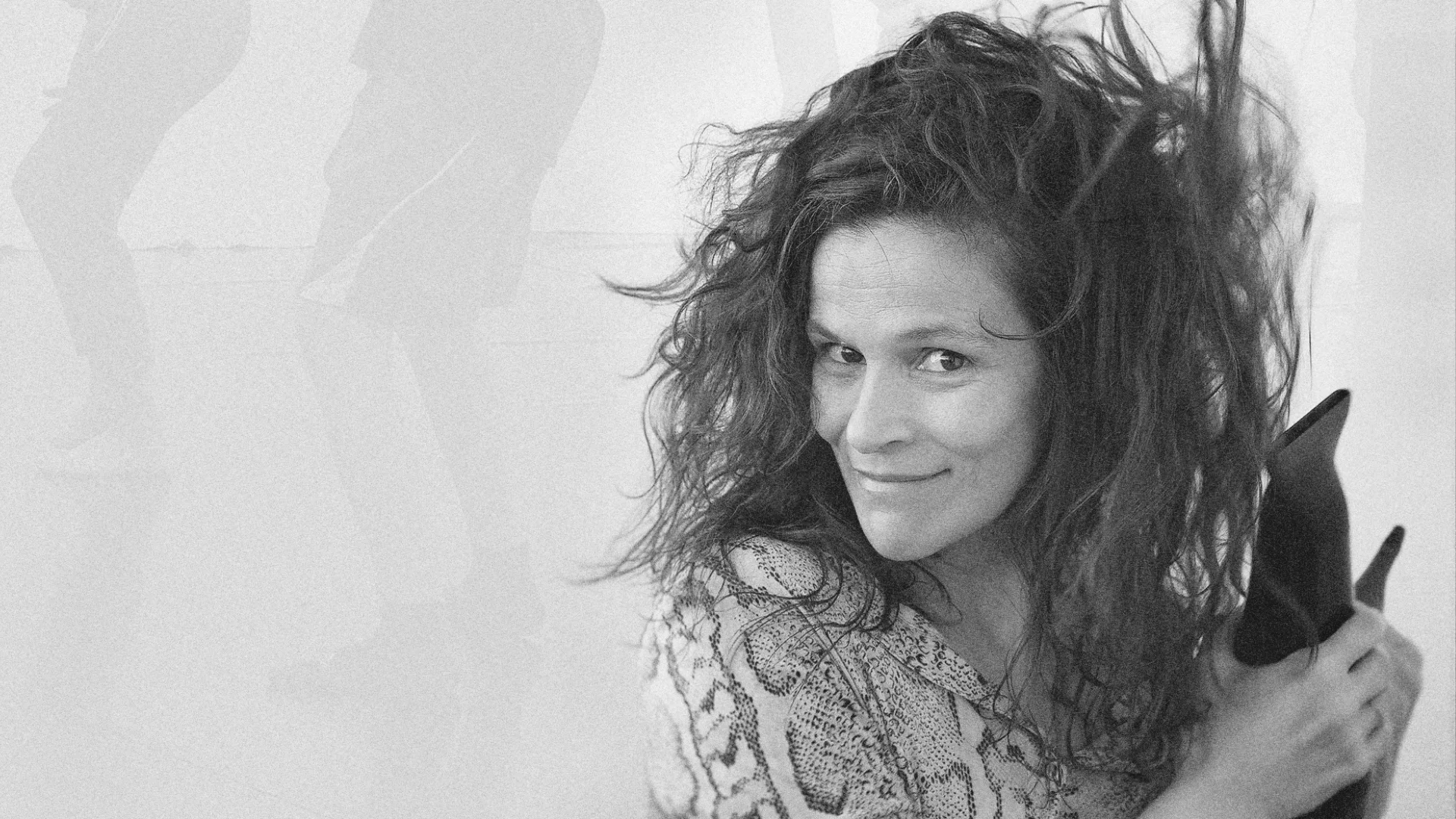
Choreographic Laboratory 26/27
Choreographic Laboratory
With Maria Ramos
Wednesday | 7:30 pm – 9:30 pm
We work on the relationship between body and space.
We watch our favorite choreographers and read our authors of choice to think about movement, composition, their landscapes, and geographies.
We draw maps, follow trails, and discover ‘events’. Sometimes we map dance, other times dance goes off the map.
We compose dances in which we are all, simultaneously, authors, performers, and observers.
Regular movement research and improvisation-composition classes in Dance, organized in three work cycles, with moments of encounter and sharing throughout the school year.
Starting from different practices and methodologies of improvisation-composition, we will begin by forming a body (individual and collective), researching different possibilities and qualities of movement and presence. Throughout the journey, we will work on the relationships between body, space, sound, objects, texts, and narratives, progressively tuning our attention and expanding this field of work to the public space – landscape, geography, horizon, relief.
Practical note
Each session begins with a physical warm-up that mobilizes breath, body, and movement, preparing the practice and introducing the work proposals that will guide the session. This initial moment creates an individual and collective starting point, essential for the development of the work throughout the class. So that we can start the class together, we ask participants to arrive a few minutes before the session starts, to have that personal moment to stretch and settle into the space.
How the Laboratory is organised
The sessions are guided by me, and throughout the year, I like to invite artists – dancers, choreographers, and musicians – to share practices and perspectives that dialogue with the work we are developing. These sessions are integrated into the Laboratory’s journey and contribute to deepening the practices of improvisation, composition, and collective play!
Quarterly plan
The sessions are guided by me, and throughout the year, I like to invite artists — dancers, choreographers, and musicians — to share practices and perspectives that dialogue with the work we are developing. These sessions are integrated into the Laboratory’s journey, deepening the practices of improvisation and composition and enriching collective play.
Autumn (September – December)
Tuning and exploration of the technical and compositional principles that will support the work throughout the year. Movement practices and improvisation in dance. JAM at the end of the term.
Winter (January – March)
Development of improvisation-composition practices, fine-tuning attention, presence, and play. Encounter and JAM at the end of the term.
Spring (April – June)
Expansion of the work developed throughout the year. Exploration of different creative contexts, including outdoor sessions and partner studios, culminating in moments of sharing and encounter.
*Active participation, commitment, and personal dedication are essential for the continuity of individual and collective work.
*The sharing moments and their respective format will be defined throughout the school year, according to the development of the work and the group.
Audience
Professionals, non-professionals, students of dance, theater, and other performing and artistic areas, as well as people from different backgrounds and interests who wish to deepen their contemporary dance practice through improvisation, composition, and movement research.Those who are just starting out in dance will benefit from beginning their journey at the start of the school year, keeping pace with the group’s evolution since the first work cycle.
Clothing / Material
Comfortable clothing that also protects the body when working on the floor is recommended (pants and long-sleeved t-shirt). Bring a water bottle, notebook, and pen. Some proposals may take place outside the studio – in that case, it is recommended to bring a layer of warm clothing and comfortable footwear.
Guest artists from previous years
Joana Pupo (actress/creator), Jaime Mears (actress/creator, AU-PT), Ana Mira (dancer/teacher), Sara Anjo (dancer/creator), Teresa Silva (dancer/creator), Angus Balbernie (choreographer/director, UK), Christy Funsch (dancer/creator, USA), Inês Zinho Pinheiro (dancer/creator), moss kissing (musician), Miguel Sobral Curado (musician), Noeli Kikuchi (dancer/creator).
Territories of research
Keywords
· Space · Body
· Relationship · Attention
· Landscape · Crossing
· Choreography as landscape-in-action*
· Practice as research
*Choreography as landscape-in-action – title of the dance research that I develop within the scope of my choreographic and pedagogical practice.
Bio
Maria Ramos
Between 1996 and 2009, she lived in the Netherlands, where she studied and developed her professional career as a dancer, working with various independent choreographers in the Netherlands, Germany, England and the USA. Highlights include her work with choreographer/director Angus Balbernie (UK), choreographers Olga Pona (UK), Katja F. M. Wolf (DE) and Janis Claxton (UK-AU). She trained in Dance at the Hogeschool voor de kunsten/ArtEZ (1996-2000) and obtained a Master’s degree in Choreography, ArtEZ Master of Choreography (Moc, 2006-2008), at the ArtEZ Institute of the Arts in Arnhem.
On her return to Portugal, she completed the Research and Creation course at Forum Dança, in Lisbon, in the context of which she began to create her first solo work, 7pm/Rumour, a piece that begins the cycle of works entitled Um Certo Grau de Imobilidade (A Certain Degree of Immobility), supported by DGArtes and the Gulbenkian Foundation. This cycle also includes the pieces Nerves and Something Still Uncaptured, presented in the Netherlands, Portugal and Argentina. He later choreographed the piece Árida, a project supported by DGArtes.
She currently collaborates with actress and creator Joana Pupo (in the project O Corpo Inominável) and with choreographer Madalena Victorino (in various choreographic projects), as a dancer/creator or as a creative assistant. At the same time, she has been teaching at the Escola Superior de Dança (since 2017), at the Escola Superior de Artes e Design das Caldas da Rainha (since 2016) and at Forum Dança (since 2012).
“When people ask me what dance technique I teach and who I studied improvisation, composition and choreography with, I always end up having to talk about my dance background and practices. In my classes, I take my own approach which includes contemporary dance techniques based on the Release technique (learned from Amélia Bentes and Sofia Neuparth and, later, during the course at EDDC/ArtEZ with teachers Eva Karczag, Mary O’Donnell Fulkerson, Gill Clarke and João da Silva); contact-improvisation (Karen Nelson, Steve Paxton); floor work; partner work (David Zambrano, Iñaki Azpillaga/Ultima Vez); fall and recovery; vertical movement and movement through space; improvisation and composition. Developed throughout my dance career with teachers and choreographers from the so-called New Portuguese Dance, such as Sofia Neuparth, Amélia Bentes, Peter Michael Dietz, Clara Andermatt and Francisco Camacho, especially in the context of the five-month Research and Choreographic Creation Course at Forum Dança, as well as in the Netherlands and England, with creators and teachers such as Steve Paxton, Deborah Hay, Yvonne Rainer (from whom I learned the iconic solo “Trio A”) and Karen Nelson/Lisa Nelson, and with dancers and teachers from the companies Trisha Brown and Siobhan Davies, Eva Karczag (who passed on to me notions of ‘full-body movement and the practice of being in the moment’ and with whom I also practiced the martial art T’ai Chi Ch’uan, which Karczag in turn learned from the teacher Gerda Geddes), Lisa Kraus and Gill Clarke.
Also important for me in terms of the performer’s work, composition and improvisation was the work I did as a dancer with choreographer/director Angus Balbernie between 2000-2009, and the workshops with the Goat Island Performance Group, Matthew Goulish and Lin Hixson, Deborah Hay, Peter Pleyer and Jonathan Burrows.”
More info: Choreographic work | Laboratory Notebook | Aulas e Práticas de Dança, Hoje
Pre-registration process
- Pre-register online using the form provided;
- Wait for our email with payment instructions;
- Pay for your registration as indicated in the email sent to you;
- Send us proof of payment to our email address;
- Your registration will only be validated once we have received your receipt.